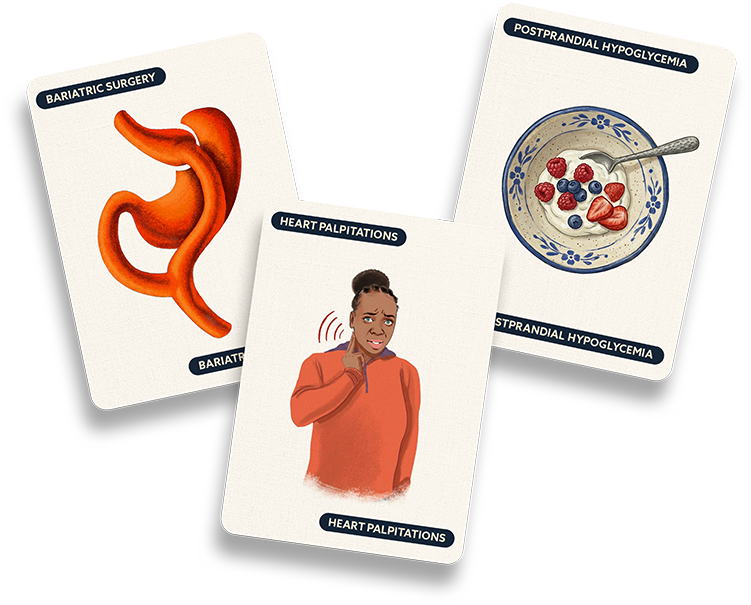
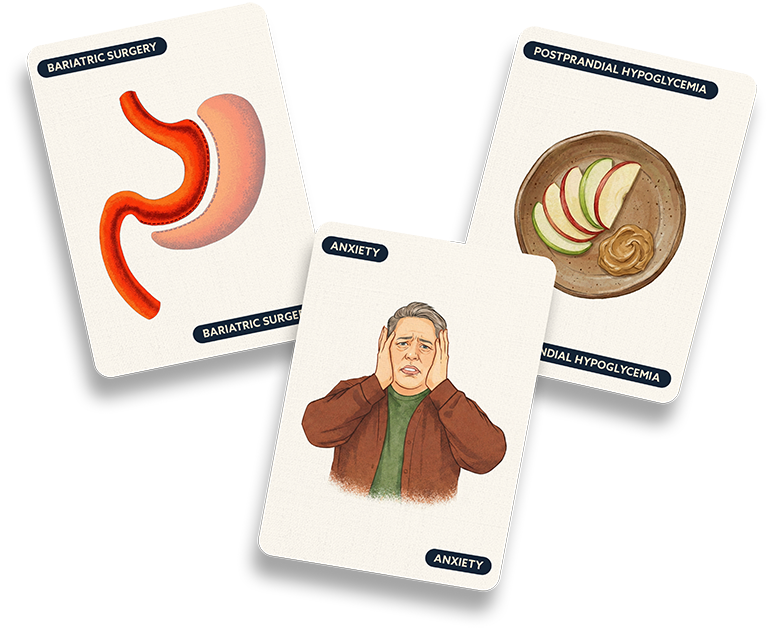
KEEP SCROLLING
The clues are below

Bariatric surgery can be a life-changing and effective treatment for obesity and related metabolic conditions.1,2
Yet months or even years later, some patients develop post-bariatric hypoglycemia (PBH), a rare, chronic, acquired condition characterized by recurrent postprandial hypoglycemia, driven by exaggerated incretin-mediated insulin secretion.1,2
PBH can have a profound impact on daily life. Recurrent hypoglycemia can compromise safety, erode independence, and significantly reduce quality of life.1 Hypoglycemic events can persist despite strict adherence to dietary and pharmacologic management. Over time, recurrent hypoglycemia is associated with cumulative clinical and safety risks, including hypoglycemia unawareness, which can increase the likelihood of potentially life-threatening events.1–3
Despite this burden, PBH remains frequently underrecognized, with patients often experiencing symptoms for years without clear explanation or structured guidance.1,2 Earlier recognition may create an opportunity for more informed management, and may help reduce the cumulative clinical and safety risks that can develop when episodes go unaddressed over time.2,4

Elizabeth,
person with PBH
“I’m terrified of eating and so much in life revolves around food. I plan everything that I eat, every day. It takes a lot. I take food everywhere, so I always know I have something that hopefully won’t mess with my blood sugar. If I have a very important day, I just don’t eat so my brain works and I don’t pass out.”
— Heather, person with PBH
Access to information on recognition, pathophysiology, diagnosis, management, and supporting resources for PBH starts here.
How does PBH typically present?
Review the symptom profile and characteristic clinical patterns associated with PBH.

How does PBH develop?
Understand how altered anatomy, accelerated nutrient transit, and dysregulated hormonal responses can lead to PBH.

How is PBH diagnosed?
Explore key diagnostic considerations in PBH, including the impact of delayed recognition, approaches to biochemical confirmation of hypoglycemia, and relevant differential diagnoses.

How is PBH managed?
Explore current approaches used by physicians to support patients with PBH, including medical nutrition therapy, pharmacologic strategies, and practical care considerations.

Where can I find PBH resources?
Discover a range of resources designed to support the recognition and assessment of PBH, including a diagnostic checklist, an episode tracker, and a mechanism of disease video.

STAY CONNECTED
Stay up to date on PBH. Sign up for educational updates and new resources for healthcare professionals and patients as they become available.
Thank you!
The form has been submitted successfully.
1. Sheehan A, Patti ME. Hypoglycemia after upper gastrointestinal surgery: Clinical approach to assessment, diagnosis, and treatment. Diabetes Metab Syndr Obes. 2020;13:4469–4482. 2. Abdelgadir E, Rashid F, Awadi FA, et al. Post-bariatric hypoglycemia management: A Gulf Cooperation Council consensus statement. J Endocr Soc. 2025;10(2):bvaf225. 3. Hölzen L, Schultes B, Meyhöfer S, et al. Hypoglycemia unawareness-a review on pathophysiology and clinical implications. Biomedicines. 2024;12(2):391. 4. Lawler HM, McGinnis T, Patti ME. Diagnosis and management of post-bariatric hypoglycemia. J Am Board Fam Med. 2025;38(2):383–394.