KEEP SCROLLING
The clues are below

For many people, life after bariatric surgery may feel like a fresh start.
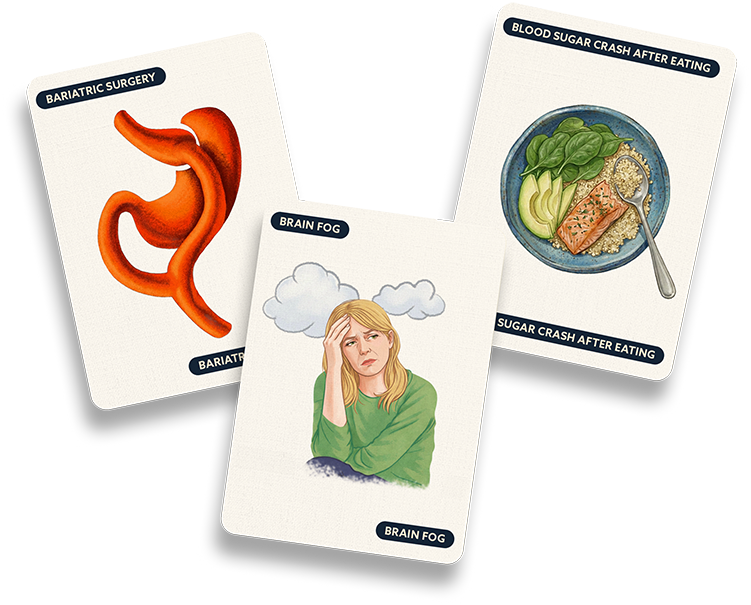
But for some individuals, months or even years later, blood sugar can suddenly drop hours after eating, bringing symptoms like shakiness, dizziness, fatigue, or confusion, and forcing life to shift in unexpected ways.
If this sounds familiar, these clues may point to post-bariatric hypoglycemia (PBH). Share your experience and symptoms with your healthcare team and ask about PBH.
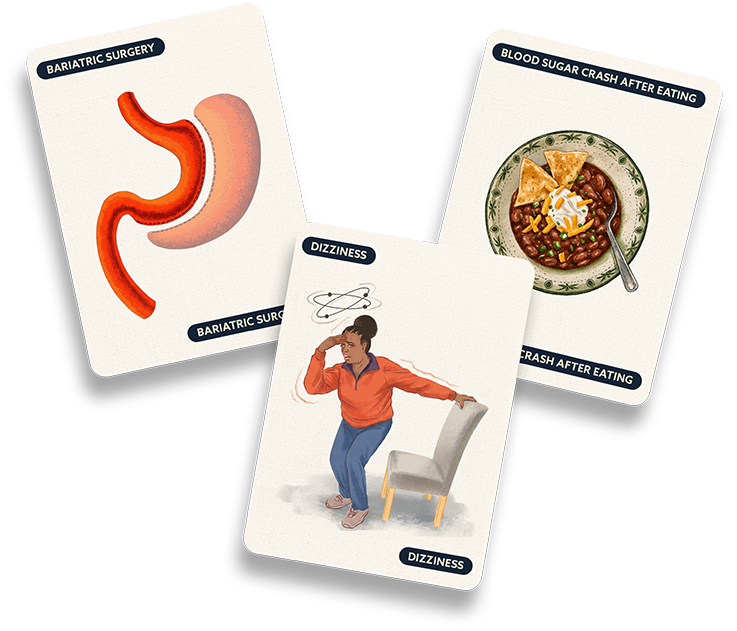

“About two years post-surgery, I started getting really tired after I ate. I would find myself needing to "take a nap". If I fought my body on that, I often felt like I was going to pass out. Even as a paramedic, I didn't associate it with low blood sugar at the time.”
— Maria, person with PBH
Understanding the Mystery of PBH Starts Here
Here you will find information that may help you make sense of what you've been experiencing, hear from others with PBH, and feel more confident talking to your healthcare team about your symptoms.
Recognizing symptoms and patterns
Highlights how symptoms may show up, how they may relate to meals, and how recognizing these patterns can help you have more informed conversations with your healthcare team.

Why this happens
Explores how digestion and hormones change after bariatric surgery, and why some people experience PBH.

Getting a diagnosis
Walks through how PBH is diagnosed, from sharing your symptoms with your healthcare team to blood sugar checks and specialist support.

Managing PBH day-to-day
Shares supportive information about how people navigate day-to-day life while working with their healthcare team.


Resources and support
Identifies resources to help you track symptoms, understand PBH, and feel more prepared for conversations with your healthcare team.

Stay Connected
If you’d like to stay connected, you can sign up to receive information, updates, and resources about PBH.
Thank you!
The form has been submitted successfully.