Downloadable Resources to Help Support You
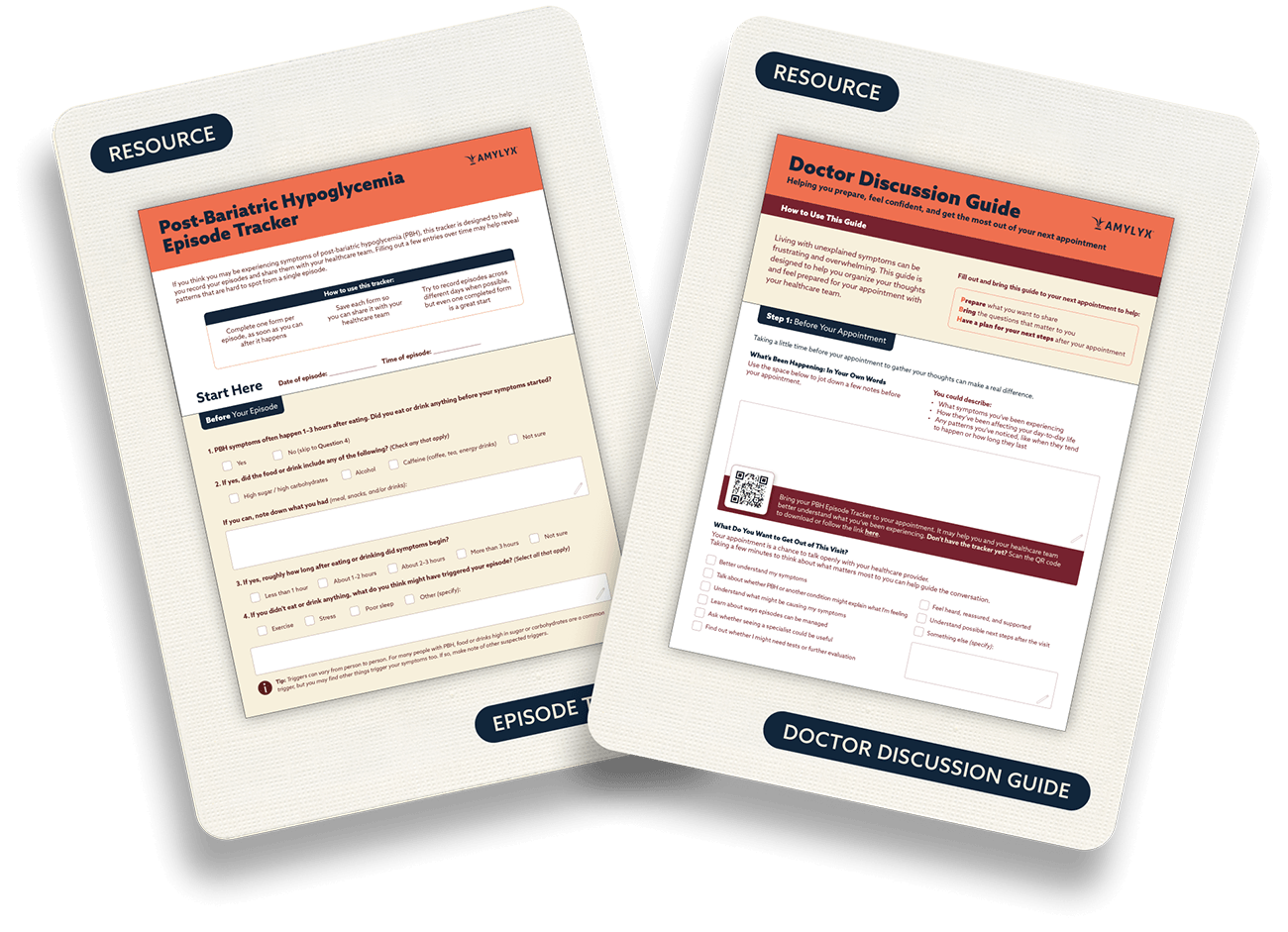
Designed to help you track patterns, prepare for appointments, and have more confident conversations with your healthcare team.
Resource:Episode Tracker
This tracker is designed to help you record your episodes and share them with your healthcare team. Recording entries consistently over time may help reveal patterns that are hard to spot from a single episode.
DownloadResource:Doctor Discussion Guide
Sometimes it's hard to know where to begin. A doctor discussion guide may help you feel more prepared for your next conversation with your healthcare team.
DownloadFrequently Asked Questions
When you’re learning about PBH, it’s normal to have questions, especially if symptoms have been confusing or hard to explain. These are some of the questions people commonly ask as they try to make sense of what’s happening and what to do next.
Is PBH something I caused?
No. PBH is a condition that can develop after bariatric surgery. It is not a sign that your surgery was unsuccessful, and it is not caused by anything you did wrong.
Why didn’t my symptoms start right after surgery?
PBH often develops months or even years after bariatric surgery, rather than right away. Scientists are still learning exactly why this happens, but they believe it is related to how the body adapts after surgery.
Can PBH symptoms look like anxiety or panic?
Yes, and this is partly because PBH symptoms can look and feel like many other conditions. Symptoms like a racing heartbeat, shakiness, and sweating can feel very similar to anxiety or a panic attack. The key difference is that in PBH, these symptoms are driven by a drop in blood sugar, usually appearing 1 to 3 hours after eating.
Keeping track of when symptoms happen and what you had eaten before the episode can help you and your healthcare team start to piece together the picture.
Do I need a continuous glucose monitor (CGM) to be diagnosed?
No. CGMs are not recommended for diagnosis. Diagnosis relies on your symptoms, when they occur in relation to meals, and confirming low blood sugar during an episode (for example, with a fingerstick or blood test). However, some healthcare teams may recommend CGMs to look at blood sugar patterns over several days.
If you and your healthcare team decide to use a CGM, it can provide additional insight into what’s happening between episodes.
Will PBH always affect me in the same way?
Symptoms and severity can change over time, and some people notice improvement with support and adjustments. Your healthcare team can help adapt your care plan with you.
Is there a cure for PBH?
There is currently no cure for PBH. Management focuses on reducing symptoms, smoothing out day-to-day ups and downs, and supporting quality of life. With the right strategies and follow-up, symptoms may become more manageable.
What’s the most helpful thing I can do right now?
Making an appointment to speak with your healthcare team about your symptoms is an important first step. As you prepare for your appointment, it may be helpful to:
- Notice when symptoms happen and how they relate to what and when you eat
- Write down a few example episodes to share with your healthcare team
A doctor discussion guide may help you feel more prepared for your next conversation with your healthcare team.
Want to Stay Connected?
Make sure you sign up to be notified when new resources and updates become available.
Stay Connected
If you’d like to stay connected, you can sign up to receive information, updates, and resources about PBH.
Thank you!
The form has been submitted successfully.