Your Healthcare Team
Who Might Help You Uncover the Mystery?
Depending on where you are in your journey, several different people may be involved in uncovering what you are experiencing.
Here’s what your journey might look like:
Stage 01:

Primary care provider (PCP) or surgical care team
This might be where your journey starts. Whether it's a PCP who hears your concerns and arranges early tests, or a bariatric team who can link symptoms back to your surgery, this is where the pieces can start to come together.
If low blood sugar may be involved...

Stage 02:

Endocrinologist
A PCP or bariatric team may refer you to an endocrinologist, a specialist in hormones and blood sugar. They can help confirm what's happening, explain test results, and begin to talk through ways of managing symptoms.
As the picture becomes clearer…
Stage 03:

Dietitian
A dietitian, particularly one with experience in PBH, may be involved to help support meal planning and managing PBH through diet.
Resource: Doctor Discussion Guide
Sometimes it's hard to know where to begin. A doctor discussion guide may help you feel more prepared for your next conversation with your healthcare team.
DownloadHow PBH Is Diagnosed
Gathering the Clues: What Your Healthcare Team Might Ask
The first step in uncovering what's going on starts with a conversation with your healthcare team. They will want to understand more about your symptoms, when they happen, and how they relate to meals.
You might be asked questions like:
- When do symptoms tend to show up?
- How long after eating do they start?
- What do they feel like in the moment?
- What did you eat before the symptoms started?
- What helps with feeling better?
- Has help ever been needed from someone else during an episode; for example, at work, while driving, or at night?
These questions help your healthcare team build a picture to see if your symptoms fit the pattern of PBH. The more information that you can give, the more clues they have to work with.
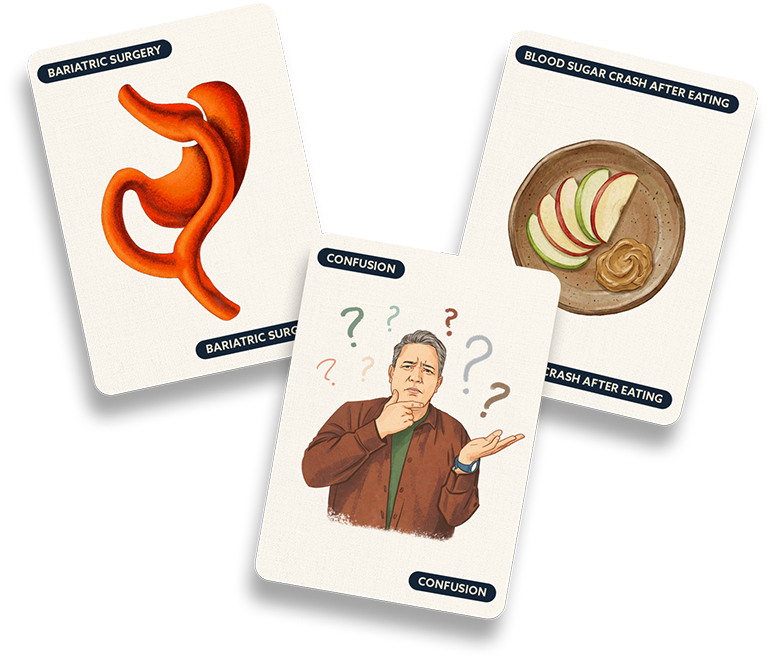
Resource: Episode Tracker
This tracker is designed to help you record your episodes and share them with your healthcare team. Recording entries consistently over time may help reveal patterns that are hard to spot from a single episode.
DownloadBlood Tests
Confirming the Clues: Checking Blood Sugar
Once your healthcare team has a clearer picture of your symptoms, the next step they may take is to check whether low blood sugar could be the culprit. This might involve:

A finger-prick blood sugar check during an episode

A blood sample taken while symptoms are happening
Your healthcare team will often look to see if these three clues happen together:

Symptoms of low blood sugar

Low blood sugar levels at the same time as symptoms

Symptoms improve when blood sugar rises
If all three line up, it helps your healthcare team understand that low blood sugar may be driving your symptoms.
Considering Other Possibilities
When the Clues Point in More Than One Direction
Some conditions that can develop after bariatric surgery share similar symptoms to PBH. Sharing your experience and symptoms with your healthcare team will help them identify what’s really going on.
One condition that is sometimes confused with PBH is dumping syndrome. Looking at them side by side can help show the differences.
PBH
Dumping Syndrome
Linked to bariatric surgery
PBH
Yes
Dumping Syndrome
Yes
When symptoms appear
PBH
Usually 1–3 hours after eating
Dumping Syndrome
Usually 15–60 minutes after eating
Low blood sugar
PBH
Yes
Dumping Syndrome
No
Examples of what people may notice
PBH
Shakiness, sweating, confusion, fatigue, racing or pounding heart
Dumping Syndrome
Stomach cramps, diarrhea, flushing, nausea, racing or pounding heart
This is just a snapshot of the differences between these two conditions. Your healthcare team will be able to discuss this further and help you understand what might be going on for you specifically.
Preparing For Appointments
Small Steps That Can Makes Appointments Easier
Going into an appointment with as much information as possible can make a real difference. If you think you may be experiencing symptoms of PBH, here are a few things worth bringing or thinking about before your appointment:
- Writing down when symptoms happen
- Noting activities and what you ate before symptoms started
- Recording what helped you feel better
- Bringing a support person
- A list of any medications being taken
- Any questions you want to make sure you ask
More information allows your healthcare team to move closer to identifying answers.

“I think it's extremely important to journal about your episodes. It's the first thing you'll be asked for at the doctor and is critical to help guide their thinking so they can fight for you. Journaling also helped me realize this isn't all in my head and it was real.”
— Cindy, person with PBH