PBH And Daily Life
How PBH May Affect Daily Life
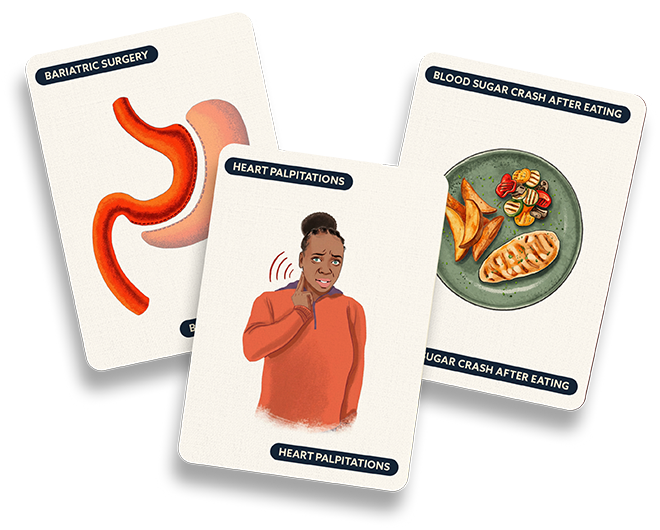
PBH doesn't just impact blood sugar. For many people, PBH can affect feelings of safety and confidence in everyday life.
Some people with PBH describe:
- Feeling less confident in public or social situations
- Becoming more cautious around activities they once did without thinking
- Carrying a sense of uncertainty about when the next episode might happen
- Changing their behavior toward food
- Struggling to carry out everyday tasks such as driving, working, or caring for loved ones
These experiences are real, common, and not a sign of overreacting. Talking openly with your healthcare team about how your symptoms are affecting daily life can help them understand the full picture and how to best support you.

Elizabeth,
person with PBH
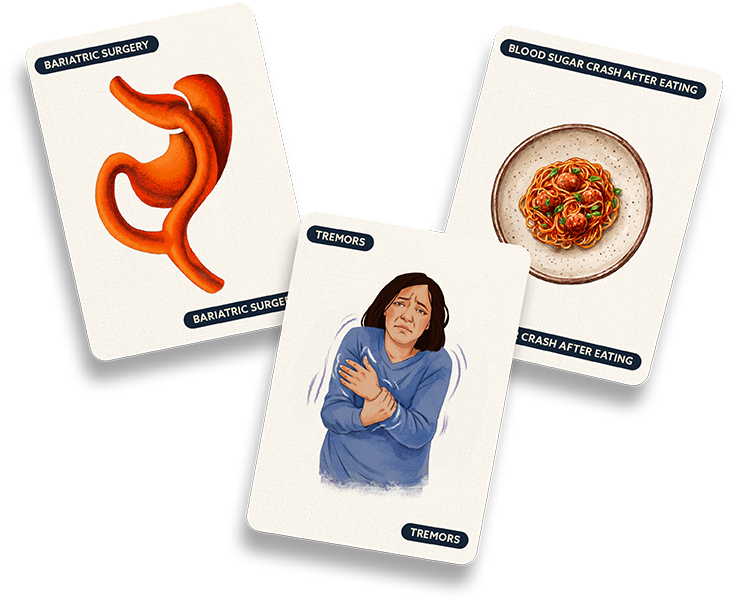

“Every outing takes careful planning with making sure I have snacks, the right timing for eating or any special safety concerns in case I have an episode. It has become a big part of my identity.”
— Jess, person with PBH
PBH Management
A Closer Look at Managing PBH
When managing PBH, your healthcare team’s goal is to help reduce symptoms in a way that fits your body and lifestyle.
They may focus on:
- Understanding your symptom patterns, especially how they are related to meals and daily routines
- Finding ways to reduce sudden drops in blood sugar after eating
- Looking at how PBH is affecting your safety, confidence, and ability to live life
Your healthcare team may try one approach at a time, see how it's working, and adjust it together with you, as needed.
PBH And Food
How Diet and Lifestyle Play a Role in Managing PBH
Managing PBH through diet isn't about blame or rigid rules. It's about building a plan that eases your symptoms and fits into your life. Dietary changes can feel overwhelming, so it's important to share any concerns with your healthcare team so they can help come up with an approach that feels manageable and realistic over time.
Together, you might focus on:
Adjusting your diet
This might include eating smaller, more frequent meals spread across the day, with a balance of carbohydrates, proteins, and fats, all aimed at reducing the chance of blood sugar dropping too low. For many people, this includes a referral to a dietitian with experience in PBH.
Understanding and managing triggers
Identifying foods, drinks, or activities that may bring on symptoms, such as foods high in sugar, caffeine, or alcohol. Your healthcare team can help you understand how these may affect your blood sugar.
Supporting general wellbeing
Making sure that any changes to eating still support overall physical and mental health. This may include planning ahead for activities like exercise, social events, or situations where alcohol may be involved.
Preparing for the unexpected lows
Putting a clear, personalized plan in place for when symptoms do strike, so that episodes feel less frightening and more manageable.
Planning for everyday safety
Because low blood sugar can affect concentration and awareness, your healthcare team may also help you think through situations like whether you can drive safely.
For some people with PBH, symptoms can be difficult to control even with careful changes to diet and lifestyle. If that happens, it doesn't mean you've done anything wrong, it's simply a reflection of how complex PBH can be.
There are no medications approved for the treatment of PBH, but research into PBH is ongoing, and scientists are continuing to learn more about why it happens and how to manage it.
If anything is making it harder to manage, whether that’s cost, transport, or other life pressures, you should tell your healthcare team, as there may be ways they can better support you.
Blood Sugar Monitoring
Tracking Blood Sugar
Your healthcare team may recommend a continuous glucose monitor (CGM), a small sensor worn on the skin that tracks your blood sugar levels. It can help both you and your team understand how your blood sugar responds to different foods. Many people with PBH use a combination of a CGM and a blood glucose meter (e.g., fingerstick testing) to track their blood sugar.
Some people find CGMs reassuring and helpful, while others can find that the alerts interfere with everyday activities. It’s important to speak to your healthcare team so that these tools can be used in a way that feels right for you.
A CGM Snapshot of Blood Sugar in PBH
Click each point on the graph below to learn more.

Meal
For many people with PBH, a meal can be the starting point of the cycle. Foods or drinks high in sugar or carbohydrates are common triggers, but things like alcohol, caffeine, stress, and even exercise can play a role too. Triggers vary from person to person, so getting to know yours is an important step.
Blood sugar spike
This sharp rise shows your blood sugar climbing quickly after eating. After bariatric surgery, food moves through your digestive system more quickly than it did before, so sugar from carbohydrates reaches your bloodstream faster. This means your blood sugar can rise higher and more quickly than it would have in the past.
Blood sugar crash
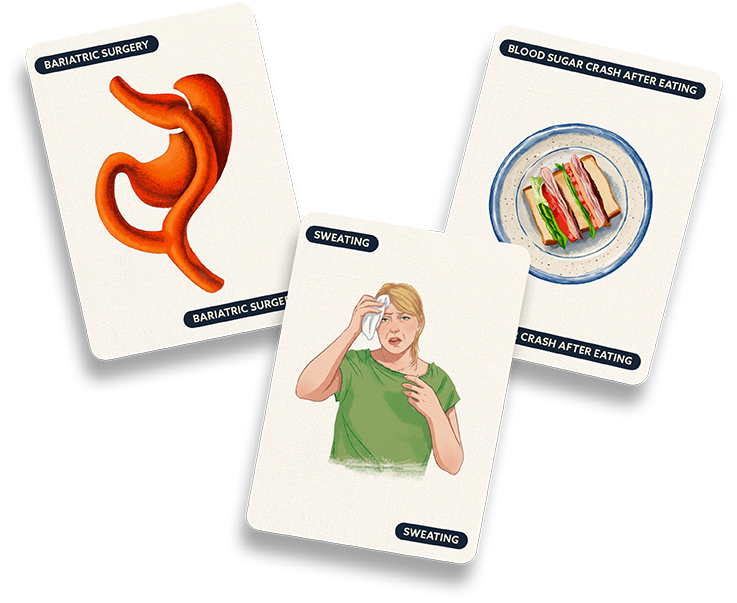
This sudden drop is where your blood sugar falls below a healthy range, usually within 1 to 3 hours of eating. Symptoms can occur at different points and are often more noticeable as blood sugar gets lower, but may vary from one person—or one episode—to the next. Some are physical, like shakiness or sweating, while others can change how you think or feel, such as confusion or anxiety.
A daily roller coaster
For some people with PBH, this rise-and-fall pattern can repeat throughout the day, which is why it can be described as a "roller coaster." Blood sugar climbs quickly after eating, then drops 1 to 3 hours later, only to begin again. Living with these ups and downs can feel exhausting, but understanding the pattern is the first step to managing it, and your healthcare team can help you find ways to feel steadier day-to-day.
This image is an illustration and does not represent a real patient.

“The CGM has been critical for me not just for my safety to alert to episodes when I haven't felt initial symptoms, but for understanding what is happening in my body, which helps me manage day-to-day.”
— Deanna, person with PBH
Support Network
Build Your Support Network
Living with PBH can be physically and emotionally demanding, and you don't have to navigate it alone. Sharing what PBH looks like in your day-to-day life can help the people around you understand how to support you:

Let a partner, friend, or family member know what your symptoms might look like and how they can help if you need it.

Talk openly with your healthcare team about situations that feel worrying or unsafe, such as driving, exercising, or if dietary changes alone aren’t managing your symptoms.

If you're feeling overwhelmed or anxious, speaking with a therapist, psychologist, or another mental health professional can be an important part of your care plan.