
Post-surgery changes
How Bariatric Surgery Reshapes Glucose Regulation
PBH develops against the backdrop of expected postoperative physiology.1
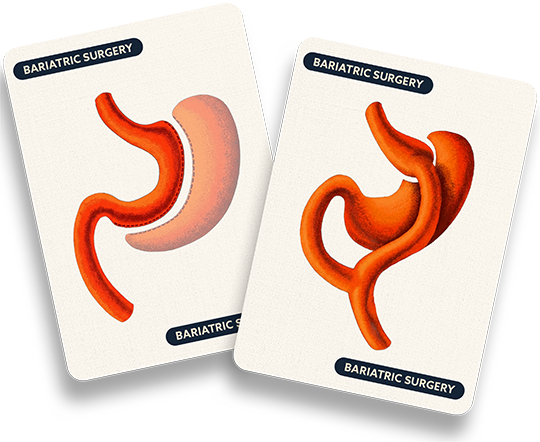
Altered upper gastrointestinal anatomy2
Following bariatric procedures such as Roux-en-Y gastric bypass or sleeve gastrectomy, the anatomy of the gastrointestinal tract is fundamentally altered. Gastric volume is reduced, and in Roux-en-Y gastric bypass, the majority of the stomach and proximal small intestine are bypassed.

Accelerated nutrient transit1
Nutrients reach distal small intestinal regions more rapidly, resulting in changes in nutrient sensing and downstream enteroendocrine responses.

Enhanced endocrine signaling1,3
For most patients, these hormonal changes amplify nutrient-stimulated insulin release and contribute to improved postprandial glucose regulation.

Why Regulation Becomes Dysregulated
How Postprandial Glucose–Insulin Regulation May Become Dysregulated in PBH
Although the precise mechanisms are not fully defined, current evidence suggests that PBH is a multifactorial condition in which altered gut-derived signals, abnormal insulin dynamics, and impaired counter-regulatory responses may combine to promote an exaggerated postprandial insulin response, leading to hypoglycemia.1,4
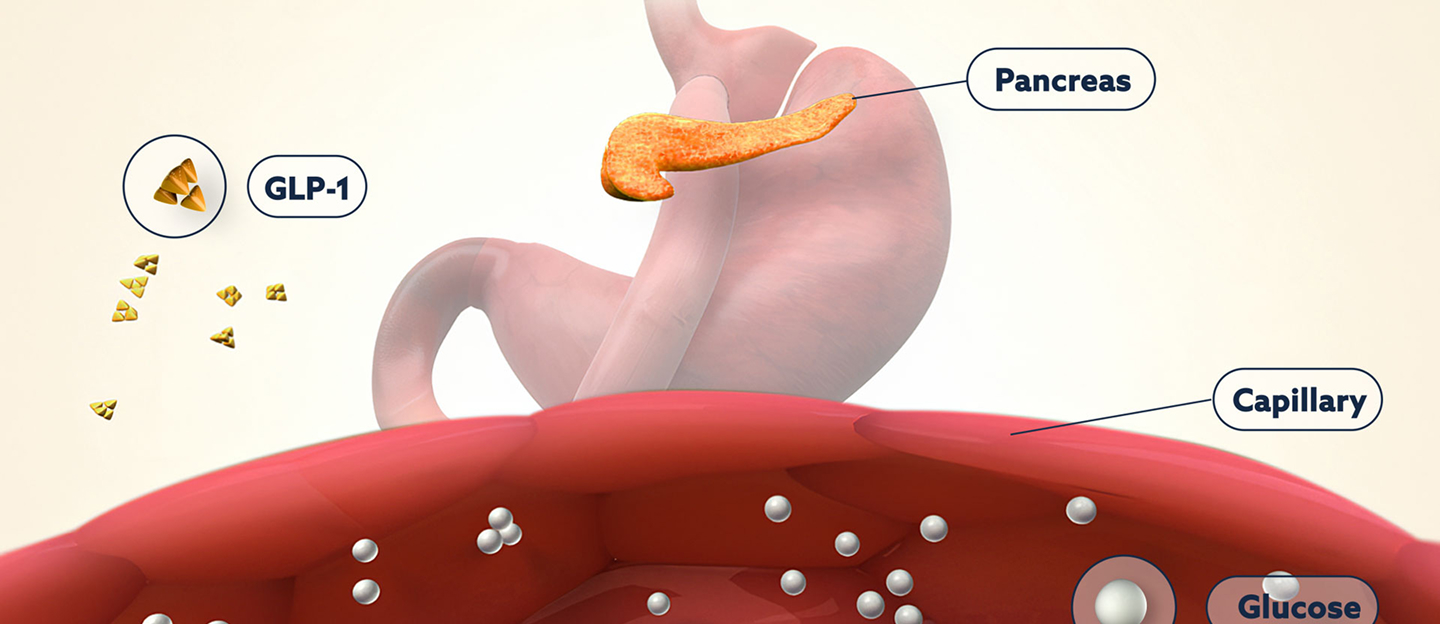
Glucagon-Like Peptide-1 (GLP-1) Response4,5
Exaggeration of the postprandial GLP-1 response enhances glucose-dependent stimulation of pancreatic β cells, contributing to disproportionately amplified insulin secretion relative to metabolic demand, increasing susceptibility to postprandial hypoglycemia.

Altered Insulin Dynamics4–6
Additional insulin-related processes may also contribute to PBH pathophysiology, including reduced pancreatic islet β-cell suppression with hypoglycemia, decreased insulin clearance, and increased peripheral insulin sensitivity.

Blunted Counter-Regulatory Response4,5
Impairment in glucagon, epinephrine, and other counter‑regulatory responses can slow the physiological recovery from falling glucose concentrations.

Other Potential Contributing Factors4,5
Additional factors, such as altered bile acid kinetics, changes in serotonin signaling, shifts in the gut microbiome, and proinflammatory pathways, may also modulate postprandial glucose regulation and contribute to PBH pathophysiology.

Postprandial Pattern
The Characteristic Postprandial Pattern
In PBH, these mechanisms can converge to produce a characteristic postprandial glycemic pattern, in which glucose rises rapidly after meals before declining into hypoglycemia, typically within 1–3 hours.4
In response, patients may ingest high-glycemic carbohydrates, sometimes in excess, to self-treat symptoms.4 While this raises glucose levels and may improve symptoms in the short term, it can also provoke a further spike in glucose and drop into hypoglycemia. This fluctuating "roller-coaster" pattern may happen multiple times within a single day.4
This cycle may contribute to the observation that PBH is independently associated with significantly less weight loss at 2 years' follow-up, and that hypoglycemic symptoms are associated with an increased risk of weight regain and lower self-reported adherence to nutritional recommendations.4
1. Hazlehurst J, Khoo B, Lobato CB, et al. Society for Endocrinology guidelines for the diagnosis and management of post-bariatric hypoglycaemia. Endocr Connect. 2024;13(5):e230285. 2. Lawler HM, McGinnis T, Patti ME. Diagnosis and management of post-bariatric hypoglycemia. J Am Board Fam Med. 2025;38(2):383–394. 3. Anastasiou IA, Kounatidis D, Rebelos E, et al. Hormonal alterations in individuals with obesity after metabolic bariatric surgery: A narrative review. Medicina (Kaunas). 2025;61(10):1724. 4. Sheehan A, Patti ME. Hypoglycemia after upper gastrointestinal surgery: Clinical approach to assessment, diagnosis, and treatment. Diabetes Metab Syndr Obes. 2020;13:4469–4482. 5. Abdelgadir E, Rashid F, Awadi FA, et al. Post-bariatric hypoglycemia management: A Gulf Cooperation Council consensus statement. J Endocr Soc. 2025;10(2):bvaf225. 6. Karimi M, Gargari. Postprandial hypoglycemia as a complication of bariatric and metabolic surgery: a comprehensive review of literature. Front Surg. 2024;11:1449012.